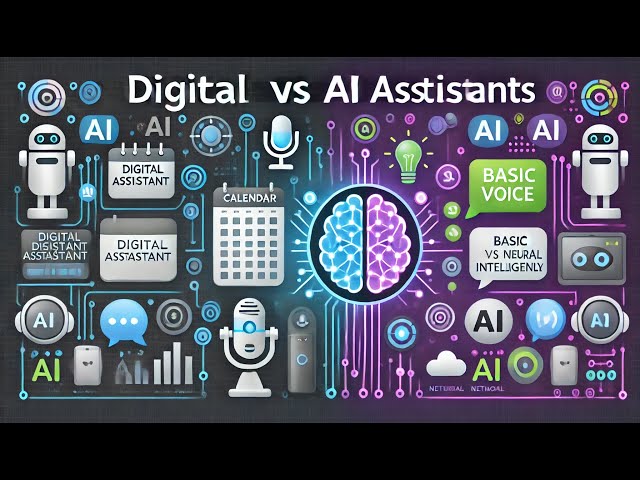

In the rapidly evolving world of technology, AI assistants have become indispensable tools for both personal and professional life. From managing daily tasks to helping with complex problem-solving, these digital helpers are transforming the way we interact with technology. In this article, we provide an in-depth guide on AI assistants compared, highlighting the strengths, weaknesses, and unique features of the most popular AI platforms in 2026.
What Are AI Assistants?
AI assistants are software programs designed to perform tasks or services for individuals based on commands or questions. Powered by artificial intelligence, machine learning, and natural language processing, these assistants can:
- Schedule meetings and set reminders
- Manage emails and messages
- Provide weather updates and news
- Help with online shopping
- Offer smart recommendations
The importance of AI assistants in modern life cannot be overstated. They save time, increase productivity, and offer personalized experiences based on user behavior.
Why It’s Important to Compare AI Assistants
With so many AI assistants available, choosing the right one can be overwhelming. By looking at AI assistants compared, you can:
- Identify the assistant that fits your lifestyle
- Save time by focusing on the most efficient tools
- Avoid investing in software that does not meet your needs
- Discover features that can enhance your workflow
A comparison ensures that you make an informed decision based on functionality, compatibility, and user experience.
Top AI Assistants in 2026
Here’s a detailed look at some of the leading AI assistants and how they perform when AI assistants are compared.
1. Google Assistant
Google Assistant remains one of the most versatile AI assistants. Integrated into Android devices, smart speakers, and even cars, it excels in:
- Voice recognition and natural language understanding
- Integration with Google services like Calendar, Maps, and Gmail
- Smart home management
- Multilingual support
Pros: Highly accurate, constantly updated, seamless integration with Google ecosystem.
Cons: Privacy concerns for some users due to data collection practices.
2. Apple Siri
Siri is Apple’s AI assistant, designed to work across iOS devices including iPhones, iPads, Macs, and Apple Watches. Key features include:
- Easy access via voice commands or typed input
- Integration with Apple services like Apple Music, HomeKit, and iCloud
- Personalized suggestions based on usage
Pros: Deep integration with Apple ecosystem, strong privacy measures.
Cons: Limited compatibility with non-Apple devices, less versatile than competitors in third-party app support.
3. Amazon Alexa
Amazon Alexa powers smart speakers, smart home devices, and even third-party gadgets. Its highlights:
- Extensive library of skills and third-party integrations
- Voice-controlled smart home management
- Routine automation for daily tasks
Pros: Highly customizable, great for smart home users.
Cons: Best experience limited to Amazon devices, some skills require extra setup.
4. Microsoft Cortana
Once a major competitor, Microsoft Cortana has evolved into a productivity-focused assistant. Cortana is now primarily integrated with Windows 11 and Microsoft 365. Key features:
- Email and schedule management
- Meeting reminders and document search
- Office 365 integration
Pros: Ideal for Microsoft-centric workplaces, enhances productivity.
Cons: Limited appeal for casual users, fewer smart home features compared to Alexa or Google Assistant.
5. ChatGPT and Other AI Chat Assistants
Modern AI chat assistants, including OpenAI’s ChatGPT, offer conversational AI experiences that go beyond traditional assistants. Features include:
- Human-like conversations
- Content creation, coding assistance, and brainstorming help
- API integrations for advanced tasks
Pros: Highly versatile, capable of creative and technical tasks.
Cons: Less integrated with smart devices, dependent on internet access.
AI Assistants Compared: Feature-by-Feature Analysis
When evaluating AI assistants compared, it helps to break down their performance across key categories.
| Feature | Google Assistant | Siri | Alexa | Cortana | ChatGPT |
|---|---|---|---|---|---|
| Voice Recognition | Excellent | Good | Good | Good | Excellent |
| Smart Home Integration | Very Good | Limited | Excellent | Limited | None |
| Task Automation | Excellent | Good | Very Good | Very Good | Excellent |
| Cross-Device Compatibility | High | Apple Only | Medium | Windows Only | High |
| Data Privacy | Medium | High | Medium | High | High |
| Creativity & Problem Solving | Medium | Low | Medium | Medium | Excellent |
This table highlights that while some assistants excel in smart home control (Alexa), others are better for productivity (Cortana) or creativity (ChatGPT).
Factors to Consider When Choosing an AI Assistant
While comparing AI assistants, consider the following factors:
- Device Compatibility – Make sure the assistant works across your devices.
- Privacy and Security – Understand how your data is stored and used.
- Ease of Use – Look for intuitive interfaces and voice commands.
- Third-Party Integration – Check if it supports your favorite apps and services.
- Cost – Some assistants are free, while premium features may require subscriptions.
Emerging Trends in AI Assistants
AI assistants are constantly evolving. In 2026, key trends include:
- Contextual Understanding: AI assistants can understand context and respond more naturally.
- Personalization: Tailored experiences based on user behavior and preferences.
- Integration with AR/VR: AI assistants will become a part of augmented and virtual reality experiences.
- Multi-Modal AI: Combining voice, text, and visual input for richer interactions.
These trends indicate that the best AI assistant is one that adapts to your needs, learns from your interactions, and grows smarter over time.
Conclusion: Making the Right Choice
In summary, AI assistants compared reveal that there is no one-size-fits-all solution. Your choice depends on:
- Whether you prioritize smart home control, productivity, creativity, or cross-device compatibility.
- The ecosystem of devices and apps you already use.
- How much you value privacy and data security.
By carefully evaluating these factors and exploring the features of each assistant, you can select the AI assistant that will truly enhance your digital life in 2026.
Whether it’s Google Assistant for seamless Android integration, Siri for Apple users, Alexa for smart home enthusiasts, Cortana for office productivity, or ChatGPT for creative problem-solving, the right AI assistant can save time, simplify tasks, and make life easier.